New Work and IT: a recipe for success?

Man reading on a tablet next to a cup of coffee

New Work and IT: a recipe for success?

The working world that established itself over decades had already been losing its appeal and its hold on employees well before the pandemic broke out.
As digitalisation worked its way into every area of working life, structures that had been stuck for years changed radically.
With New Work, a philosophy has entered the working world that redefines how work and life fit together.

New Work: the idea

The New Work idea goes back to Frithjof H. Bergmann, a social scientist and philosopher who formulated a new and altered working world as a counterpoint to traditional capitalism. In his view employees should be granted the greatest possible individual freedom. The choice of what kind of work to do, where to do it and when is therefore entirely theirs.

The IT sector, still a fairly young branch that began in the 1960s and 1970s, looks particularly well suited to this philosophy. A mix of home office, freely arranged hours and decentralised teamwork lets employees build a working and personal life with a degree of freedom, self-determination and self-realisation that was unknown until recently.

New Work: the values

In defining New Work, Frithjof H. Bergmann set out core values: independence, freedom and participation in the community.

Independence

Employees should be granted a high degree of personal responsibility and independence. That covers deciding how much workload they can handle and which assignments and tasks they take on, as well as choosing the place and the timeframe in which the work is to be done.

Freedom

Deciding to work independently gives employees a great deal of freedom. It is no longer necessary to spend eight hours at fixed times in an office or plant as the one place work can happen. A lot of work can be done from home or from places people choose for themselves. Video conferencing tools such as MS Teams and co-working apps such as Trello or Stackfield make it possible, as do the ongoing digitalisation of business processes, paperless working and Industry 4.0.

Participation in the community, or the lone fighter at home?

The New Work principle does not rely on the home office alone as the alternative to the office. Employees should not turn into isolated lone fighters working through their tasks by themselves. Because every project, and agile methods in particular, has phases where working together in person cannot be replaced, the IT sector in particular has taken to using co-working spaces for stretches at a time. Unlike the classic workstation in an open-plan office, a co-working space gives employees a place with real creative potential for the phases when physical presence is needed, somewhere ideas can be developed and project stages agreed together.

New Work and IT

The IT sector looks structurally ideal for the New Work model. The tasks of a software developer, an infrastructure administrator or an ERP consultant can be handled practically anywhere, thanks to powerful laptops and tablets. Access to virtualised servers and databases and a heightened awareness of IT security make it work.
As executive search consultants we already see today that IT companies are only attractive to top talent if they guarantee their people individually configured, up-to-date hardware and software along with the greatest possible freedom and self-determination over working hours and location. Uncomplicated home office arrangements and office spaces designed to encourage creativity and communication, while still supporting both individuality and team spirit, are part of that. Anyone who wants to win the best talent in future will not get past New Work.

transfer-company-fair-redundancies

Hart aber fair - Personalanpassung mit Transfergesellschaften

Hard but fair: workforce reductions through a transfer company

Katja Dreyer, an experienced consultant at SCHLAGHECK + RADTKE executive consultants in Düsseldorf, increasingly sees companies in difficulty having to part with strong performers.

So what can be done? As a former head of HR, Katja Dreyer knows her clients' position well. "Changed conditions leave companies wrestling with situations that force them to release executives and highly qualified specialists whom they will urgently need again sooner or later." It is therefore worth taking a few points to heart when economic circumstances make a workforce reduction unavoidable.

1. You meet twice in life
If a separation process is not handled fairly, every departing employee can turn into a problem for the employer. Employees who feel treated unjustly do not keep their anger about their previous employer to themselves. An employer brand built up over years takes a serious knock from just a handful of negative reviews on the relevant portals. And if the person let go finds their new professional home in a key role at one of your customers, the business relationship had better be solid if it is to survive undamaged. If that annoyed former employee is well connected in the industry, more damage follows. Bad word of mouth unfortunately travels fast and can become a problem in later recruitment within the same sector. So: given how quickly conditions now change, it makes sense to keep every chance open of winning that released performer back at a later date, and a fair separation process is how you do it.

2. A professional farewell culture is not optional
One interesting way of handling a necessary separation with respect is to set up a transfer company (Transfergesellschaft, TG below).
There the affected employees are supported over a longer period in preparing and qualifying for a new professional challenge, much like classic individual outplacement. These measures are funded both by the former employer and by the German Federal Employment Agency, with the aim of averting unemployment and unfair dismissal claims. The company gives the person being let go the sense that they are being properly looked after and prepared for a new role. Ideally they leave without disappointment and feel valued instead.

We spoke to Jörg Herling, project and site manager for Düsseldorf at Mypegasus, Germany's largest transfer company.

KD: What is a transfer company?
JH: The transfer company is an instrument of labour market policy. Its legal basis is section 111 of the German Social Code, Book III. Transfer companies take on employees who are at risk of unemployment and support and qualify them for a period capped at twelve months. Participants move across through what is called a three-party contract, between the releasing company, the employee and the transfer company.

KD: And what is a transfer agency?
JH: A transfer agency runs placement-support measures while the employment relationship is still running. Employees are released from work for those appointments but otherwise remain part of the business. The Employment Agency funds up to 50 per cent of the measures, capped at 2,500 euros in total. What is decisive is how much the employer puts into it. If a move to a transfer company follows, funds can be carried over.

KD: When do you use which instrument?
JH: Interestingly, you can combine the two. The transfer agency is often used when production targets still have to be met while jobs are being cut. Transfer companies always aim to give the employee a perspective rather than hand them over to unemployment. Employment in a transfer company is a proper employment relationship subject to social insurance contributions.

KD: Which companies are transfer agencies and transfer companies suitable for?
JH: In principle both work for almost any business. The law defines an operational change under section 111 of the Works Constitution Act, with an agreed social plan, as the basis for setting up a transfer company. Pure headcount reduction can also satisfy the operational requirement. Depending on the size of the business, between 5 and 10 per cent of the workforce has to be at risk of unemployment; in businesses with fewer than 60 employees, at least six people. Smaller businesses without a works council can also use the transfer company instrument as long as they observe those thresholds. In that case the necessary agreements are covered by an arrangement similar to a social plan together with a general undertaking.

KD: What are the advantages for employees and employers?

For employees:

  • Direct unemployment is avoided
  • Material security, among other things through a top-up to the transfer short-time allowance
  • An employment relationship subject to social insurance, with all the associated benefits
  • A return after suspension is possible while the transfer company is running, for example if the employee takes a job and resigns again shortly afterwards
  • Individual support, advice and qualification
  • Time gained, with no disadvantages if unemployment does occur later
  • Participants are available to potential employers at short notice for trial periods or internships

For employers:

  • Separation handled in the spirit of social partnership, which helps the employer image
  • Full planning certainty on time and cost
  • Flexible in implementation at any point
  • Notice periods are not relevant
  • The three-party contract rules out litigation risk
  • Funding through the transfer short-time allowance

KD: What exactly happens inside a transfer company that a "normal" unemployed person would not experience?
JH: The most important element is the intensity of the advice and coaching. The frequency is agreed individually and adapted to needs. The participant's abilities and goals are established. All of this happens in a multi-stage process that begins with the legally required profiling. Together with a personal transfer adviser, and after an analysis of strengths and weaknesses and a look at the labour market, the necessary qualification needs are defined. While the classic unemployed person is obliged to accept any reasonable work, a transfer company participant can think through possible new career paths without pressure. What can I do, what do I want to do in future, what does the labour market offer, and which qualifications do I need for that?

KD: Could you give an example of successful transfer work?
JH: We currently have the following project: setting up an organisationally independent unit, in other words a transfer company, following an operational change in which a production area was shut down. Seventy employees from production, development and administration were affected. Fifty people entered the transfer company, some of them close to retirement. All but a few are employed there for twelve months. Despite the pandemic, several participants were placed in the first six months, and after seven months almost all the production staff have found new roles. Personally I am pleased when participants have reached their own goals by the end of the transfer period. Even where no new employment has yet been taken up, people often judge their own situation as satisfactory, because they feel valued.

KD: Can the success be put in figures?
JH: Setting up a transfer company can largely be structured so that it is cost-neutral for the company. Because the transfer short-time allowance is granted, one month of notice period funds roughly two months of transfer time. Even counting the funds the company provides for qualification measures and for topping up the allowance, there is usually a financial advantage for the employer. Litigation risk also disappears, because employees terminate the old employment relationship by mutual agreement when they enter the transfer company. Funds not used up flow back to the employer. Employees have the advantage of remaining part of working life and continuing under the social and financial conditions they are used to. That also helps the employer, because it makes such a measure easier to accept. At the same time employees can qualify further or reorient themselves professionally altogether.

KD: How has demand for this service developed?
JH: Demand for transfer services is rising sharply because of the current economic situation. The labour market is in motion, and a transfer company opens up a lot of room for manoeuvre, above all through the time it buys compared with going straight into unemployment.

KD: Which service is particularly in demand today?
JH: Support through the separation process itself, above all. Employers also expect to be able to place the future of former employees in qualified hands and spare them unemployment.

KD: What role do transfer companies play right now, during the pandemic?
JH: I think the effects of the pandemic are not yet fully visible, and in this situation the transfer company is needed more than ever as a way of parting with employees in a socially acceptable manner. It will be some time before the labour market settles back at pre-crisis levels. During that time and afterwards, companies will in some cases need staff with entirely new qualifications. The groundwork for that is being laid now. That is exactly where the demands on a transfer company currently lie. Transfer is therefore also an investment in the future of the company.

KD: Thank you for a very informative conversation. Stay well.

Postscript: Mypegasus sets up transfer companies on behalf of client companies and provides comprehensive advice on them. Schlagheck + Radtke executive consultants supports companies above all in the search for specialists and executives, and also in succession and career planning and in running internal assessments, including digital ones. The human capital that remains in the company should also be looked after and deployed well after a period of adjustment, so that strong performers do not leave when you least want them to.


If you do not respect your candidates, do not talk about a skills shortage

Graphic: a hand picks one highlighted person from a row of candidates

If you do not respect your candidates, do not talk about a skills shortage

Respect should always count for a lot in life. That applies to hiring as well. Candidates enter a selection process today with clear expectations, particularly when they got there through active sourcing or executive search. Alongside courtesy and respect, professionalism, transparency and speed weigh heavily in how candidates judge a process. Set against that, many companies still visibly lack up-to-date processes and the corresponding mindset, whether in HR or in the department itself. Anyone who ignores what candidates expect from a selection process today should not be surprised when their preferred candidates look for their professional future at a competitor.

To avoid losing suitable candidates along the way and to carry them over the finishing line, we recommend the following.

1. Structure
Selection processes have to be clearly and efficiently structured. Everyone involved should know in advance what is expected of them and when.

2. Speed
Speed matters for success just as much as quality. Candidates expect the individual steps to follow one another briskly. Longer gaps in between feed uncertainty on the candidate side and considerably increase the likelihood of a withdrawal.

3. Transparency
Information about how the selection process runs is just as important as realistic information about the position, the conditions and the company. Candidates expect clarity about which steps follow a first interview and which decision-makers are involved.

4. Meeting as equals
Every step, every interview and any psychological testing used have to be respectful, factual and comprehensible from the candidate's point of view as well. They also have to give candidates relevant information and therefore something of value for their own decision.

It should be obvious to everyone that candidates who are not actively looking for a new challenge, and who enter a process through a direct approach, do not see themselves in the applicant's role. They see the company doing the searching in it.
As executive search consultants we can say from our own experience that selection processes in which the points above are properly taken into account and convincingly lived usually do lead to a successful appointment, however often a skills shortage is invoked.

Job references: handle with care

Vorsicht Arbeitszeugnis!

Job references: handle with care

For some people, the meticulous analysis of employment references is an indispensable part of every selection decision. For others, references are not worth a second glance.
In Germany, unlike in most countries in the world, every employee is entitled to a qualified written reference when the employment relationship ends.
Under section 109 (2) of the German Trade Regulation Act, that reference has to satisfy the principles of clarity, truthfulness, completeness and goodwill. A reference may therefore contain no ambiguous wording (clarity). It should contain all the material facts that matter for an overall assessment of the employee (completeness) and it should give an accurate account of their performance and conduct (truthfulness). The reference has generally to be carried by goodwill, because under German case law it must serve the employee's progress. Beyond that there are numerous further legal requirements on the form and drafting of references. There are good reasons why references should play a supporting role in candidate screening, but never a decisive one.

References are never objective

Assessments in employment references are never based on diagnostically mature measuring instruments. They are subjective judgements. Where you know little about the expectations of the person writing them, about the working environment or about the job requirements the assessments refer to, particular caution is called for.

Positive assessments in a reference also do not necessarily reflect what the previous employer believed. Often they are the result of a negotiation between the departing employee and the employer. What employer wants to argue at length with someone who is leaving about how a sentence should be phrased? Not infrequently a positive reference is the outcome of an out-of-court settlement or even of a court decision in the course of a separation. Assuming that a very positively worded reference always describes an outstanding, high-performing employee would therefore be naive.

On top of that, references often use an obscuring, standardised, formulaic language. Building blocks and decoding guides for it are available everywhere. Whether the author of a particular reference actually drew on them and used them deliberately usually remains unclear. Whether the author interprets the wording they have used in the same way as the reader does is equally unanswered. An unusual or ambiguous formulation does not automatically hide a negative message either. It may simply be the attempt of a less gifted writer to avoid uniform phrasing and express something in their own way.

Ignoring references altogether would still be foolish

Screening carries a lot of weight. Misjudgements made during screening, when written applications and references are analysed, can only be corrected by later selection methods such as interviews or assessment centres if the candidate is still in the process after the documents have been reviewed. So if candidates are overrated during screening, that error will usually still come to light later in the procedure. It looks quite different when a candidate drops out of the process on the basis of their documents and references alone and receives a rejection. Those candidates get no chance to demonstrate what they can actually do in the role in question. And the misjudgement is no longer recognisable as one. In times of skills shortages in particular, we can hardly afford this kind of error, the type II error.

Despite their limited value as evidence, references in my view always offer a good way of talking to candidates about their previous experience from a further perspective, that of the earlier employer. One essential condition for that is that both sides meet each other as equals and without prejudice. The way a candidate takes a position on individual statements in their reference usually produces additional relevant impressions of their personality and their self-image. The descriptions of duties and tasks in a reference lend themselves to a conversation about a candidate's professional experience and about how they behaved in specific situations or under specific demands. Where that works, a reference can serve as an aid to dialogue and make a good contribution to a well-founded selection decision.

“My personal review of the year” by Klaus Schlagheck

"Mein persönlicher Jahresrückblick" von Klaus Schlagheck

"My personal review of the year" by Klaus Schlagheck

When we saw the first terrible pictures a year ago, the Covid dead and the rigid lockdowns in China, hardly anyone could imagine that something like this would even be possible in Europe. A few months later the pictures from northern Italy taught us otherwise. Many dead who had to be carried away in military vehicles, and cities sealed off completely. Shortly afterwards, unlimited freedom of travel within the Schengen area was over. Borders became borders again, and the much-invoked European solidarity turned out to be more limited than before. Governments were busy securing the necessary quantity of masks on the world market for their own voters. Trump-style egotism had suddenly arrived in Germany too. It is reassuring that this attitude did not fully prevail when it came to the vaccines. In early summer we looked towards Italy, Spain and other regions that had been hit harder. I did so myself, in the mistaken belief that we would limit the spread of the virus better than other countries, through the responsible action of our politicians, through protective measures that made sense, and of course through the famous German discipline.

In summer the virus suddenly seemed to have disappeared, at least from people's minds. The most important question now seemed to be: where to go on holiday? The more the politicians invoked the goal of a single approach across all federal states, the more inconsistent it became. Every state premier had meanwhile mutated into a Covid expert who knew exactly the right path for "his" state. Ignoring the fact that not even oceans had stopped the virus from spreading, travel restrictions within Germany were suddenly supposed to help. With that, a nasty whiff of the GDR had returned. Within a few months, a piece of cloth became a symbol of oppression and unfreedom for a few thousand Germans. So-called Querdenker did their level best to help the virus along. Even when it had long been clear that people who demonstrate against protective measures will consequently be happy to ignore them too, the right to freedom of assembly and to stupidity was rated more highly than the right to consideration and health. By now we are several tens of thousands of fights for survival in our excellently equipped intensive care units and several thousand Covid deaths further on. Of course nobody made a mistake, not a single state premier and no education minister either. Still, it is good that our politicians are back on a more or less common course and now rate the right to health more highly than the right to go shopping.

Covid has demanded a lot from all of us over the past year and will probably continue to do so. But it has also shown many of us that it is not always about higher, faster, further. After a year like this one it does you good to pause, to think about what really matters, and to remind yourself how privileged we are by international standards. For all the annoyance about individual Covid measures that made no sense, about our often self-satisfied politicians, about the stupidity and ignorance of so-called Querdenker and about the recklessness you see so often in everyday life, I am glad that I am living through this pandemic in Germany, a free country with a well-functioning public sphere, an excellent health system, very good social protection and many other things we take for granted that are anything but.

Merry Christmas and a good start to the new year!

“Not interested.” Are you sure?

„Kein Bedarf“ – Wirklich nicht?

"Not interested." Are you sure?

"Not interested." Executive search consultants hear that answer often when they approach potential candidates. Frequently such enquiries go unanswered altogether. It is widespread in exactly those fields that are most in demand and short of experts. So why do the people working in those professions appear so uninterested in changing jobs and developing further?

Impersonal messages sent through Xing or LinkedIn by recruiters and consultants on the volume principle, often written in complete ignorance of the recipient's professional focus and goals, are a considerable nuisance. The specialists and managers on the receiving end are rightly fed up with them. Respect looks different. Nobody should have to deal with obviously irrelevant job offers that bear no relation to their profile, to the experience and skills listed there or to what they say they want. It seems, though, that quite a few recruiters and consultants have lost all sense, under constantly rising pressure to deliver, that changing employer is far more for most people than crossing from one side of the street to the other. It always brings existential questions and uncertainties, unfamiliar challenges, new colleagues and managers, and often a move to a different town.

Even so: for your own career planning, working with a good consultant whose approach is not aimed purely at short-term wins can be worth a great deal. A consultant who approaches the work with empathy and a real interest in how their candidates develop can be of considerable use to anyone who wants to get on professionally. The consultant's knowledge of the market and their background information on potential employers often give candidates a decisive advantage when career decisions are due. A good consultant also knows how to bring out a candidate's individual strengths and open the door to a potential next employer. So why let that chance pass?

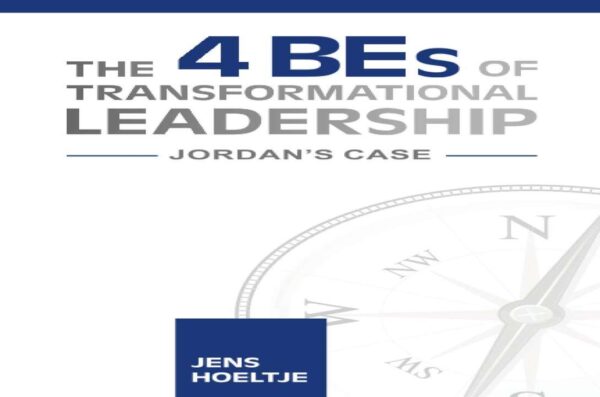
The 4 BEs of Transformational Leadership: Jordan’s Case

The 4 BEs of Transformational Leadership: Eine Buchrezension

The 4 BEs of Transformational Leadership: Jordan's Case

A book review by Klaus Schlagheck

The ability to adapt to changing conditions, to new technologies or shifting markets, has always been a basic condition for long-term business success. Digitalisation, advancing at breathtaking speed, has now turned disruptive change and transformation into catchphrases across a great many industries. What gets discussed in that context is mainly the technological or organisational adjustments considered necessary. That good concepts are nowhere near a guarantee of a lasting transformation is amply documented. Change processes are usually highly complex, demanding and, for everyone involved, very taxing over a long period. Implementing them successfully takes precise planning, a willingness to make sacrifices and, above all, a lot of stamina. It is all the more surprising, then, that the question of which particular management qualities decide whether a transformation succeeds or fails is so often neglected next to the technical and organisational questions. Among our clients, mostly mid-sized companies, transformation management has become an important subject too. We increasingly see it in our search mandates. Experience and a demonstrable track record in managing change now belong to the standard requirements for candidates in a range of management roles. But which personal qualities and which behaviours actually go with that kind of success?

With "The 4 BEs of Transformational Leadership – Jordan's Case", Jens Hoeltje makes an interesting contribution to the subject that is well worth reading. Through his two protagonists, Jordan and Nick, he gives us an insight into a highly successful transformation project at a long-established industrial group with several thousand employees. He makes no secret of his admiration for Jordan and for what are evidently outstanding personal and leadership qualities. The author puts the extraordinary commercial success of a transformation project running over several years down chiefly to Jordan's ability to get every senior figure involved committed to the necessary transformation from the outset, and to carry them along at every stage of a more or less stony road to success. What is it that fascinates Nick about Jordan? For Nick it comes down to the four BEs of transformational leadership that distinguish Jordan and largely explain his success in mastering a mammoth project. Be ambitious: Jordan is highly ambitious and does not shy away from confronting his people with very ambitious project targets. Be disciplined: he is extremely disciplined and demands at least as much of himself as of his staff. Be prepared: he prepares for possible setbacks as well as he can and reacts fast, decisively and with a plan. Be successful: for Jordan, success and targets reached are no reason to sit back, only stages on the way to further success.

Trivial as those four BEs may look at first, Nick's conclusions are convincing and hold together. He illustrates his observations authentically and with a feel for practice, drawn from what was clearly a very fruitful collaboration with Jordan on this project. At the end of each chapter the author summarises the resulting lessons in clear bullet form and gives the reader precise recommendations to take away.

One aspect unfortunately gets only a passing mention. However consistently Jordan drove the transformation described to success, everyone should be aware that such an uncompromising approach probably also produces considerable psychological and physical strain on everyone involved. What price did individual participants have to pay for their complete commitment? What effect did that gigantic workload have on people's private lives? The 4 BEs of Transformational Leadership is a well-made and entertaining mixture of a detailed account of a genuinely disruptive transformation, the subjective perception of someone who was there, and an attempt to describe optimal leadership behaviour in such a process. In only 130 pages the author offers interesting insights and food for thought for anyone who will have to deal with change in future, whether in an actively shaping role or a supposedly passive one. Nick's subjective perspective is an invitation to reflect on your own behaviour during change. I certainly enjoyed reading it.

The book is available from Amazon for 14.20 euros.

The computer nerd stereotype: An appeal for foresight

Promising potential

The days when students of mathematics and the natural sciences were primarily seen as intelligent but odd, overly introverted, or overly cerebral must finally be over. Companies are likely to find exactly the intellectual potential among these graduates that can move them forward on their path into an increasingly digitalised future.

This is precisely where you are most likely to find people who meet the many challenges of tomorrow's business reality with logical reasoning, an analytical approach, the ability to think in abstractions, objectivity, and tolerance for complexity. There is particular demand for these people today in the booming information technology sector. The shortage of experts is no secret. Yet the hiring process still frequently sees company decision-makers make flawed assessments and decisions when dealing with IT professionals.

Missteps in dealing with IT professionals

This potential for error often stems from prejudice against IT professionals. Commonly referred to in everyday speech as a "computer nerd", the stereotype of the socially inept homebody has persisted stubbornly to this day.

In truth, people with an unusually strongly developed analytical personality can indeed often show deficits in both verbal and non-verbal communication skills, which may appear odd to an outside observer. No fish without bones, no person without weaknesses.

In a professional setting, different worlds often collide. Particularly in interviews, you frequently find two people sitting across from each other who seem anything but alike. As the counterpart to the "computer nerd" sits the extroverted, trained and experienced HR professional at the other end of the table. Their job is precisely the goal-oriented communication that our technically skilled candidate finds so difficult. A lack of eye contact, defensive body language and restless movements can quickly turn the conversation into a one-sided interrogation.

The more a role demands a hands-on mentality, the less suitable the candidate is deemed to be. In the end, both sides are left with a question mark.

Beyond the interview situation, the CV becomes an obstacle for some too. There is still a lack of understanding that a career in IT is often anything but linear. To the HR professional, the various projects strung together may appear disconnected. Candidates are often wrongly judged as unsuitable here, based on the wrong yardstick.


The "nerd" as a superstar

This illustrates well how a promising collaboration can be nipped in the bud. The candidate who is a perfect professional fit is rejected because of their personality (or their CV). This inadequate differentiation in how companies deal with these people means enormous potential is lost. But even supposed nerds have what it takes to become a superstar!

Nobody embodies this better right now than Elon Musk. The Tesla founder and self-made billionaire spent his childhood almost exclusively with his nose in books and his face in front of a computer screen. He was bullied and even beaten by his peers. Today, he embodies a spirit of innovation and vision for global progress like hardly anyone else. A shy outsider became one of the most successful entrepreneurial figures in the world.

Recognising and nurturing potential

HR decision-makers need to broaden their horizons. Few have missed the excess demand in the IT job market. IT professionals know their worth. Every missed chance to win over a genuine talent must be viewed especially critically. Being too picky here has to be considered negligent. It is a matter of developing a feel for candidates' potential rather than screening them out prematurely.

Personal development takes time, and that time needs to be granted. Companies also need to become aware of their responsibility to develop their employees' soft skills and build experts who combine technical and social competence. Companies that succeed at this will, in future, be able to boast that they employ true exceptional talents.

At Schlagheck + Radtke, we see our task as executive search consultants as conveying the right understanding of this particular type of person to our clients. We make sure that promising collaborations come about, and that diamonds and great potential are not carelessly overlooked. By using personality diagnostic methods, such as an individual assessment, we also have the ability to present development potential with outstanding transparency. That way, we can optimally support our clients in making the best possible hiring decisions.
 

When employers up their offer

Illustration: Arbeitgeber legt einer Kandidatin ein Angebot vor

The counteroffer: often not the optimal solution

Demographic change is causing a shortage of specialists. The anticipated difficulty of filling key positions with qualified people within a reasonable timeframe has prompted a rethink among companies. While the old approach used to be "let them go if they must", nowadays presenting a counteroffer is a commonly used tool to prevent an important employee from leaving.

Continuing the employment relationship this way rarely offers the optimal solution for both parties.

For executive search consultants, this development presents a new challenge.


Appreciation from the employer

The range of motivations behind a resignation prompted by a job change is broad. From deeply rooted intrinsic factors, such as the drive to develop one's own abilities or the wish to carry more responsibility, to external influences such as difficulties with a supervisor or frustration over being passed over for promotion, many reasons can be decisive.

These individual aspects often converge into one dominant, feeling-driven motive for changing jobs: a lack of appreciation from the employer.

Counteroffers typically include a higher salary, a new title, or even a new company car. One should certainly avoid generalising here, but doesn't the employee often have every right to ask why a contract adjustment only happens once notice has been given? And doesn't this frequently just postpone the underlying problem rather than solving it?

Appreciation can't simply be wired into a bank account, and it doesn't appear on a business card! It is mainly tied to a sense of respect and goodwill from the employer. A lasting improvement in the employee's emotional state is therefore not to be expected in the majority of cases.


Trust after the resignation

The employer, too, should closely analyse the circumstances under which a counteroffer is made. The difficulty of filling key positions is usually clear to everyone involved.

At times, resigning can be used quite bluntly as a method to put pressure on the employer. What is presented as a farewell announcement can turn into an outright threat. It cannot always be assumed, therefore, that offering a better contract happens out of purely voluntary motivation.

Inevitably, the intention to resign also calls the employee's loyalty into question. The fact is: as a manager, you won't forget the situation. The planned resignation will always be somewhere in the back of your mind going forward, and more than one boss will catch themselves already mentally looking for a replacement from that point on. Can irreparable damage to the relationship of trust really be ruled out here?

The role of the executive search consultant

Counteroffers cannot be prevented. Our duty is to keep the likelihood of a candidate withdrawing as low as possible, in our client's interest. To do that, we need to accurately assess how the candidate would handle being presented with such an offer.

That is only possible with a very sound assessment of the true origin and nature of the motivation to change jobs. This can be of fundamental importance for the candidate too. How else could the question of their resolve in such a situation be answered honestly and reliably?

Such an analysis requires various qualities, such as patience and the ability to empathise. Only this builds the kind of trust between candidate and consultant that enables a conscientious assessment of the situation.

In our view, that must be the standard every executive search consultant holds themselves to.

On the home stretch to a new job

Auf der Zielgeraden zur neuen Stelle

Candidates form an impression of a prospective employer from early on in the application process. A positive candidate experience, from first contact through to signing the contract, is the prerequisite for every applicant to come away with an unclouded, good first impression of the hiring company. Once a candidate is successfully recruited, carefully planned onboarding is the ideal opportunity to confirm and reinforce that positive impression.

False sense of security at the end of the hiring process

Unfortunately, the following is quite common to observe: the hiring process appears almost complete, signing an employment contract seems like a mere formality, and suddenly the attention and appreciation shown to the prospective new employee, both by the hiring company and often by the executive search consultant involved, start to fade. After an elaborate selection process, everyone assumes nothing can go wrong now. As a result, the selected candidate visibly slips down the list of priorities, and communication with them is neglected. Even "minor" carelessness on the company's part can, in the final phase of a hiring process, have a lasting negative effect on the candidate experience. It becomes critical when situations and misunderstandings arise that create uncertainty or doubt for the selected candidate, ultimately jeopardising a contract signature that had seemed all but certain. Contract offers not infrequently contain unpleasant surprises for candidates too.

Contract terms that deviate from points previously believed to be binding regularly cause irritation among candidates. Even a job title that differs from the original job posting "for internal reasons" can lead to considerable uncertainty on the candidate's part. At the latest, a salary offer below the originally discussed figure, or restrictive rules on holiday entitlement, home office or travel expenses that were not discussed beforehand, raise legitimate questions even for the most good-natured candidates about how reliable their future contract partner really is, putting the contract signature itself at risk.

The magic word: empathy

Attention and appreciation are not the only areas where obvious shortcomings can be observed. Empathy for the prospective new employee often leaves something to be desired too. The sensitivity and awareness of how important a candidate's personal situation is seem to have gone missing for quite a few HR professionals and executive search consultants these days. Many decision-makers seem either entirely uninterested in candidates' personal circumstances, or too unsure to bring the subject up. The sometimes enormous impact a job change has on someone's living situation seems to play, at best, only an incidental role for many decision-makers. Yet this is precisely where enormous risks lie. A spouse's previously never-discussed unease, or a child's school situation, not infrequently leads to a last-minute change of heart. Danger lurks elsewhere too: while employers used to operate on the principle of "let them go if they must" when an employee resigned, nowadays it is increasingly common for that employee to receive an attractive counteroffer from their current employer.


Onboarding starts before the contract is signed

Onboarding a new employee begins in the final phase of the hiring process, not on the first day of work! HR managers and executive search consultants alike need to bridge, with the necessary professionalism and empathy, not just the time between the ink drying on the employment contract and the new employee's actual first day, but also the preceding steps of the hiring process itself. Anything less strikes us as simply negligent! The extra time invested always pays off: it protects against unpleasant surprises and contributes to a positive candidate experience.